
Deep Art AI
Facts verified:
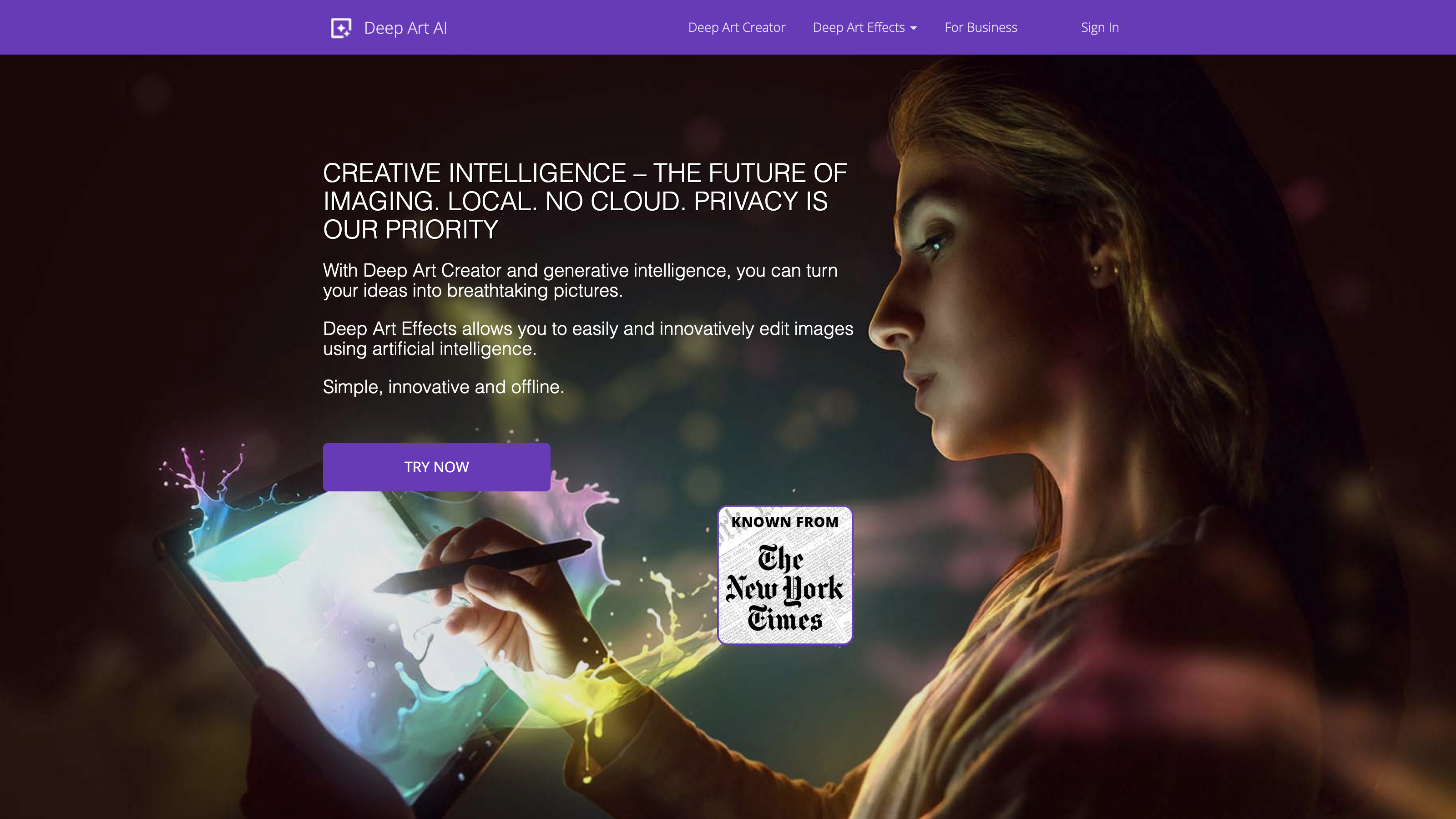
Deep Art AI Review: Neural Style Transfer, Upscaling, and AI Art Tools Examined
TL;DR
This Deep Art AI review covers a platform that combines photo and video transformation, AI upscaling, background removal, and text-to-image generation into one suite. Deep Art AI targets content creators, marketing teams, and agencies who need stylized, production-ready visuals at scale. The platform spans web, desktop, mobile, and API access, but pricing is not publicly listed, which means buyers cannot compare costs without entering the signup flow before committing.
Overview
Deep Art AI brings together two products - Deep Art Effects and Deep Art Creator - under one brand. The core problem it solves is straightforward: producing consistent, stylized visual content takes time, skill, and software that most marketers and creators either lack or find expensive to scale.
The platform uses neural style transfer, a technique where an AI analyzes the texture, color patterns, and brushwork of an artistic style and applies them to your photo or video. The result is a transformed image that looks painted, illustrated, or stylized rather than photographic. Beyond style transfer, Deep Art AI has expanded into AI Apps for Images and AI Apps for Videos, including upscaling, colorization, background removal, and a text-to-image and video generation suite called Deep Art Studio.
It also offers a Developer API - a programming interface that lets businesses plug style generation directly into their own apps or automated workflows. The mobile app extends access to iOS and Android users, and the desktop version handles heavier, offline processing tasks.
The platform is notably broad for a tool that started as a single-filter neural art app. Whether that breadth is a strength or a source of scattered focus is worth examining closely. The generative features in particular carry less documented detail than the core transformation tools, which matters for buyers trying to compare options before signing up.
Pricing and feature details in this review were verified from the official site in July 2026.
Key Features
AI Art Style Filters
The signature capability of Deep Art AI is its library of artistic style filters powered by neural style transfer. Users select a style - ranging from oil painting and watercolor to abstract and sci-fi - and the AI applies it to any photo or video. The output preserves subject structure while replacing the visual texture with the chosen artistic language. This is the core tool for anyone building branded visual content or selling styled digital art. It also supports video files, not only still images, which separates it from simpler filter apps.
4x AI Image Upscaling
Deep Art AI includes 4x AI Image Upscaling, which enlarges images to four times their original resolution without the blurring or pixelation that standard resizing produces. Standard resizing simply stretches existing pixels. The AI alternative fills in estimated detail instead. This is useful for print-on-demand sellers, photographers working with mobile captures, and agencies preparing assets for large-format advertising.
Automatic Image Colorization
The Automatic Image Colorization feature converts black-and-white or grayscale images into color versions. The AI infers likely colors based on context - sky regions become blue, foliage becomes green, skin tones are estimated from surrounding data. Output quality depends on image clarity and contrast. This feature is particularly relevant for archival projects, historical content, and editorial work. Images with low contrast or heavy compression produce less reliable color estimates.
Background Removal
Background Removal uses AI to isolate the subject of a photo by detecting edges and separating the foreground from the background. The resulting image can be placed on new backgrounds or used in composite designs. For e-commerce sellers and design teams, this removes a repetitive manual task. Accuracy on complex edges - hair, fur, transparent objects - varies depending on image quality and source resolution.
Offline / Local Processing
Deep Art AI supports Offline / Local Processing through its desktop application. This means image transformations run on the user's own hardware rather than cloud servers. For users handling sensitive visuals - client photos, unreleased product images, confidential marketing materials - this is a meaningful privacy and security advantage. It also removes dependency on internet speed for render times. The mobile and web versions do not offer this option.
Text-to-Image and Video Generation (Deep Art Studio)
Deep Art Studio adds Text-to-Image Generation and Text-to-Video Generation capabilities to the platform. Users type a description and the AI produces an original image or short video clip. This feature positions Deep Art AI alongside generative AI tools more broadly, moving beyond transformation of existing assets into creation from scratch. The platform does not currently publish output resolution limits, generation speed benchmarks, or style-consistency controls for these features. Buyers who prioritize generative output quality should request this data directly before committing.
Developer API
The Developer API allows software developers and businesses to integrate Deep Art AI's style generation and image processing into their own products, websites, or automated pipelines. This is relevant for agencies running Automated Marketing Collateral workflows or SaaS platforms that want to offer styled output to their own users without building the underlying AI. The site does not publish rate limits or per-call pricing publicly.
User Retains Artwork Rights
Deep Art AI states that users retain the rights to artwork they create on the platform. This is a direct contrast to some AI tools that claim broad licenses over generated outputs. For commercial use - selling prints, licensing styled images, running paid campaigns - ownership clarity matters. Buyers should confirm specific terms in the current terms of service before large-scale commercial use.
Deep Art AI: Pricing
Pricing is not publicly listed on the homepage in a clear, tier-by-tier breakdown. The official site at deeparteffects.com does not display specific dollar amounts or plan names in a standard pricing table visible to unregistered visitors. Prospective users will need to sign up or contact the team to confirm current plan costs, feature limits, and API pricing.
This is a meaningful gap for buyers doing pre-purchase research. Without visible pricing, it is impossible to compare cost-per-image or monthly subscription value against alternatives without entering the signup flow. Teams with formal procurement processes should factor in this extra step.
Who It's Best For
Content Creators and Influencers Creators who produce high volumes of stylized social content will find the AI Art Style Filters and batch processing useful. Applying a consistent visual style across a content library in minutes is a real time advantage for anyone managing multiple channels.
Marketing Teams and Agencies Teams running Display Advertising or Paid Social Media Marketing campaigns need fast turnaround on branded visuals. The combination of style filters, background removal, and upscaling covers a large portion of the image prep workflow. The API extends this to automated pipelines.
E-Commerce Sellers Product image preparation - background removal, upscaling for print, color correction - maps directly to the platform's feature set. Sellers on print-on-demand platforms benefit from 4x AI Image Upscaling when converting mobile photos to print-ready files. The ownership policy also makes commercial resale straightforward.
Developers and Technical Teams The Developer API makes Deep Art AI relevant for teams building visual tools or content platforms. Rather than building neural style transfer from scratch, developers can integrate existing capabilities via the API. This fits startups and agencies building custom Automated Marketing Collateral systems. Published API documentation detail should be confirmed before scoping a build.
Photographers and Digital Artists Automatic Image Colorization and high-resolution upscaling are useful for photographers working with archival material or presenting work in large formats. The offline processing option adds a layer of data privacy that cloud-only tools do not offer, which is a concrete advantage for photographers handling client work under confidentiality agreements.
Not the Right Fit: Users Who Need Precise Generative AI Control Deep Art AI's Text-to-Image Generation and Text-to-Video Generation features are part of the platform, but the tool's core identity is transformation of existing images rather than open-ended generative creation. Users who need fine-grained prompt control, style consistency across multiple generated scenes, or character reference locking for animated content will likely find specialist generative tools - such as Midjourney, Stable Diffusion, or Runway - better suited to those needs. Deep Art AI is strongest when you have source material to transform, not when you are generating from nothing.
Alternatives
Prisma Prisma offers neural style transfer for photos via a mobile-first app. It is more narrowly focused than Deep Art AI, without upscaling, colorization, or a developer API, but the mobile experience is polished and the filter library is well-established for personal and social content use.
Adobe Firefly Adobe Firefly, embedded in the Creative Cloud suite, offers Text-to-Image Generation, generative fill, and style controls integrated directly into Photoshop and Illustrator. For teams already using Adobe tools, Firefly offers tighter workflow integration than Deep Art AI. It lacks offline processing and the neural style transfer depth of Deep Art AI's core transformation tools.
Runway Runway focuses on AI Apps for Videos - including text-to-video, video style transfer, and background removal for footage. For teams whose primary need is video rather than still image transformation, Runway offers more advanced and more fully documented video-specific AI capabilities than Deep Art AI currently publishes.
FAQ
Does Deep Art AI work without an internet connection? Yes, through the desktop application. The Offline / Local Processing feature runs image transformations on your own computer rather than cloud servers. This applies to the desktop version specifically. Mobile and web-based features require an active connection.
Can I sell artwork I create using Deep Art AI? The platform states that users retain the rights to artwork they create. This means you can use styled images for commercial purposes - selling prints, licensing content, running paid campaigns. Always confirm specific commercial use terms in the platform's current terms of service before large-scale monetization.
What does the Developer API allow? The Developer API - a programming interface connecting your software to Deep Art AI's processing - lets developers automate style generation, image transformation, and related features inside their own apps or websites. It is suited to agencies and SaaS products that want to offer branded visual tools to their own users. Rate limits and per-call pricing are not publicly listed and should be confirmed before scoping a technical integration.
How does 4x AI Image Upscaling compare to standard resizing? Standard resizing enlarges pixels, which creates blurring and visible artifacts at higher magnifications. 4x AI Image Upscaling uses a neural network to estimate and generate detail that fills the enlarged image. The result is sharper and more usable for print or large-format display than a standard resize of the same source file.
Is Deep Art AI suitable for video content, not just photos? Yes. The platform covers AI Apps for Videos through style filters applied to video files and the Deep Art Studio's Text-to-Video Generation feature. The depth of video-specific controls is not fully documented publicly, so teams with complex video workflows should evaluate the tool directly and request output samples before committing.
Deep Art AI: Final Verdict
This Deep Art AI review lands on a clear conclusion: the platform is a credible, multi-function tool for creators and marketing teams who need to transform existing visuals into styled, production-ready content at scale. The combination of AI Art Style Filters, 4x AI Image Upscaling, Background Removal, Offline / Local Processing, and a Developer API covers a wide range of real production tasks in one place.
The strongest case for Deep Art AI is for agencies, e-commerce sellers, and content creators who have large volumes of source images or video and need consistent stylized output without building a custom workflow from separate tools. The API and offline processing options extend its value to technical teams and privacy-conscious professionals who work under confidentiality requirements.
The main caveat is pricing opacity. Without public pricing, buyers cannot do a straightforward cost-per-feature comparison before signing up. If transparent, upfront pricing is important to your procurement process, factor in the extra step of direct contact before committing. The generative AI features also need more documented detail - specifically output resolution, generation speed, and style-consistency controls - before they can be evaluated against specialist alternatives like Runway or Adobe Firefly with confidence.
For image transformation and production-scale visual styling, Deep Art AI delivers a focused, well-structured toolset backed by verified vendor data as of July 2026. For open-ended generative creation, the comparison is less clear-cut without more published output data.
The facts.
Pulled from Deep Art AI’s own pages and dated so you can see how current each one is. Anything we could not confirm is left out rather than guessed.
- API access
- Yes checked Oct 2026
- Platforms
- web, desktop, mobile, api checked Oct 2026
Pros & cons.
We don’t publish star ratings we can’t defend. These come from running Deep Art AI on live briefs.
AI-generated analysis; edited and accountable: Tom Young. Data is verified from vendor sites on a dated schedule, not hands-on trials.
- Verified
- July 2026
- Pipeline
- 2026.07.04-1
- Checks run (2)
- author, quality_review
- SEO score
- 68
- Evidence sources (1)
- deeparteffects.com