Midjourney Review: Is This Generative AI Image Tool Worth It?
TL;DR
This Midjourney review covers a cloud-based generative AI platform that turns text prompts into high-resolution images and short video clips. As of July 2026, plans run from $10/month to $120/month across four paid tiers. If you're a content creator, part of a marketing team, or running a business that needs polished visuals without the usual headaches, keep reading.
What Is Midjourney? A Quick Overview
The core idea is almost disarmingly simple: type a description, get a detailed image back in seconds. No software to download. No specialized GPU sitting under your desk. The whole thing runs in a browser, which means a solo freelancer and a 50-person marketing department are starting from the exact same place on day one.
And the problem it solves? Real and expensive. Custom photography means scheduling, equipment rentals, post-production time. Commissioning illustration takes days, sometimes weeks. Midjourney compresses all of that to minutes. For teams running frequent campaigns or building out e-commerce product imagery, that's not just convenient - it has direct cost implications on every project.
The platform has a strong reputation among design professionals, particularly for photorealistic rendering and painterly stylization. It carries a "Most Popular" badge in its category, and honestly, it's earned. That said, this isn't a point-and-click template tool. It rewards users who take time to understand how prompts, parameters, and style controls work together. The learning curve is real, and it's worth factoring into your decision before you commit.
Pricing and feature details in this Midjourney review were verified from the official site in July 2026.
Midjourney Review: Key Features
Text-to-Image Generation
You write a natural language prompt - something like "flat-lay product shot of ceramic mug on linen fabric, soft diffused light, editorial style" - and the system returns four image variations. From there, you can upscale a result you like, generate new variations on it, or remix with adjusted parameters. Output resolution supports HD images up to 2K, which covers most digital advertising and web use cases, including Facebook and Amazon product listings.
Video Generation
Midjourney also supports video generation alongside its image output. Now, to be clear, this isn't full-length video production. We're talking short clips - the kind that work well for social media content, animated product previews, or motion concepts. SD video is available on all paid plans. HD video is reserved for the Pro ($60/month) and Mega ($120/month) tiers. That distinction matters quite a bit for teams who need broadcast-quality motion content versus those who only need web-optimized clips.
Generative AI Controls - Chaos, Stylize, and Turbo Mode
Here's where Midjourney gets genuinely interesting. The Chaos parameter controls how different those four generated variations are from each other - crank it up when you're exploring a concept early and want to see wildly different interpretations. Stylize controls how strongly Midjourney's own aesthetic bleeds into the output. Fast and Turbo GPU modes let you trade speed against cost: Turbo runs faster but draws from your Fast GPU hours at a higher rate.
This level of control is what separates Midjourney from simpler generate-and-accept tools. Trust me on this one - once you get comfortable with these parameters, you'll wonder how you worked without them.
Brand Consistency and Style Tools
For marketing teams managing visual consistency across multiple campaigns, Midjourney offers Style References, Personalization profiles, and Moodboards. Style References anchor new generations to the visual tone of existing images. Moodboards let teams collect reference imagery to guide prompt direction. Personalization profiles store individual aesthetic preferences so outputs trend toward a consistent look over time. If visual drift across a campaign is something you've had to clean up before, these features will feel like a genuine relief.
Editor and Creation Modes
The editor lets you modify generated images directly inside the platform - inpainting-style adjustments that change specific areas of an image, and outpainting that expands the canvas beyond the original frame. These tools reduce how often you need to jump out to a separate editing application for every small refinement. The workflow stays cloud-based and collaborative, which teams tend to appreciate once they're in the rhythm of it.
Describe and Prompt Shortener
The Describe feature works in reverse: upload an image and the system generates a text prompt that could have produced it. Useful for reverse-engineering a style you stumbled across somewhere. Prompt Shortener analyzes long, unwieldy prompts and suggests a condensed version that keeps the core intent intact. Both tools support faster iteration with less manual back-and-forth.
Collaboration, Sharing, and Organization
Users can rate images to earn free Fast GPU time, organize creations into collections, and share work within the platform. For agencies and marketing teams, that shared workspace matters. Reviewing and approving imagery without exporting files for every feedback round saves time that genuinely adds up across a project.
Image Prompts
Image Prompts let you submit an existing image alongside your text prompt to influence the style or composition of the output. This bridges the gap between reference-based creative briefs and fully prompt-driven generation - particularly useful for client work where a visual direction already exists and you need the output to honor it.
Midjourney Pricing: All Four Plans Compared
Midjourney runs on a subscription model with four paid tiers. There is no free plan, which we'll get into later.
Basic - $10/month (or $8/month billed annually, totaling $96/year): Includes 3.3 hours of Fast GPU time per month - roughly 200 minutes. No Relax mode. SD video only.
Standard - $30/month (or $24/month billed annually, totaling $288/year): Bumps Fast GPU time to 15 hours per month and adds Unlimited Relax images. Relax mode generates images at lower priority when your Fast GPU hours are depleted - slower, but it doesn't eat into your monthly allocation. Includes SD video.
Pro - $60/month (or $48/month billed annually, totaling $576/year): Provides 30 hours of Fast GPU time per month, Unlimited Relax images, SD video, and HD video generation. This tier also includes Stealth Mode, which keeps your generated images private rather than visible in the community gallery.
Mega - $120/month (or $96/month billed annually, totaling $1,152/year): Doubles Fast GPU time to 60 hours per month and includes everything from Pro - HD video, Stealth Mode, the works.
Annual billing saves 20% across all tiers. One thing worth flagging: Stealth Mode - which matters to any business protecting unreleased visual assets - is locked to Pro and Mega. So if you need privacy, your entry cost jumps to at least $48/month on an annual plan.
Who Is This Midjourney Review For? Best-Fit Use Cases
Marketing teams running ongoing campaigns: Teams producing frequent ad creative for Facebook, Instagram, TikTok, Pinterest, and Amazon need high volume and consistent quality. Midjourney's Style References and Personalization profiles support brand consistency across campaign batches without starting from scratch every time. Standard or Pro fits depending on your image volume.
Content creators and influencers: Creators who need custom imagery for posts, thumbnails, or sponsored content can generate on-demand visuals without stock photo licensing costs. The Basic plan covers low-volume personal use, but heavy users will outgrow 200 Fast GPU minutes per month faster than they expect.
E-commerce operators: Product visualization is a well-documented use case here. Sellers on Shopify or Amazon can generate lifestyle imagery, background variations, and creative mockups without a full photography budget. The editor and creation modes let you make adjustments without needing a separate design tool in the loop.
Game developers and concept artists: Rapid iteration on environment concepts, character silhouettes, and mood studies is genuinely faster through prompt-driven generation than traditional sketching pipelines at the early-exploration stage. The Chaos parameter earns its keep here - you can generate a wide spread of directions from a single prompt and find angles you wouldn't have thought to sketch manually.
Agencies managing multiple clients: Collaboration and organizational features support multi-project workflows. Stealth Mode is particularly important here. If you're working on unreleased campaigns, private generation isn't optional - it's necessary, and that means Pro at minimum.
Not the right fit - users who need template-driven simplicity: Midjourney doesn't offer templates or presets in the traditional sense. If you want to drop a product photo into a pre-built ad layout and export a finished file, you're going to find the prompt-driven workflow frustrating pretty quickly. Tools like Canva or Adobe Express are better suited to that kind of production. Midjourney generates images. It doesn't lay them out.
Midjourney Alternatives Worth Considering
Adobe Firefly: Adobe's generative AI tools integrate directly into Photoshop and Illustrator, which makes them stronger for users already living in Adobe's ecosystem. Firefly's commercially safe training data is also a documented advantage for enterprise clients who have image licensing concerns. It doesn't match Midjourney's raw stylistic range, but it fits structured design workflows much more naturally.
DALL-E 3 (OpenAI): Available through ChatGPT Plus and the OpenAI API - a programming interface that lets developers connect the tool to other software. DALL-E 3 handles text rendering inside images better than most competitors, which is genuinely useful for ad creative that includes typography. It's more accessible to non-technical users, but produces less painterly or cinematic output than Midjourney at its best.
Stable Diffusion (open-source): The main advantage here is self-hosting. Run it on your own hardware, no subscription required, no Stealth Mode concerns at all. The trade-off is technical setup, hardware requirements, and a steeper configuration curve. It's not a browser-based turnkey solution, and if that sentence made you nervous, it's probably not for you.
Frequently Asked Questions About Midjourney
Does Midjourney have a free plan?
No. As of July 2026, Midjourney doesn't offer a free tier or trial credits. All access requires a paid subscription starting at $10/month on the Basic plan. It's a meaningful barrier for anyone who wants to test output quality before committing real money.
What is Relax mode and why does it matter?
Relax mode generates images at lower server priority, so they take longer to complete - sometimes several minutes rather than seconds. It does not consume Fast GPU hours. On the Standard plan and above, Relax mode is unlimited, which makes those tiers genuinely cost-effective for high-volume users who can work around slower turnaround on non-urgent projects.
Can I use Midjourney images commercially?
Commercial use rights depend on your plan and account type. You'll want to review the specific licensing terms directly on Midjourney's site before using generated images in paid advertising, Google ad campaigns, or product packaging. Don't assume - check.
Is Midjourney suitable for video production?
It supports short video generation, not long-form video. SD video is available from the Basic plan up. HD video requires Pro ($60/month) or Mega ($120/month). It's useful for social media clips and motion concepts. It's not built for full advertising spots or film production.
How does Stealth Mode work?
Without Stealth Mode, all your generated images are visible in Midjourney's public community gallery. Stealth Mode prevents that. It's only available on Pro and Mega plans. Freelancers or agencies working on confidential client projects should factor this into their plan selection early - it's not something you want to discover after you've already generated assets.
How does Midjourney compare to other generative AI image tools?
Midjourney leads on stylistic output quality and creative range among cloud-based subscription tools. Adobe Firefly is stronger for users inside the Adobe ecosystem. DALL-E 3 handles in-image text better. Stable Diffusion suits technically confident users who want a self-hosted, no-subscription setup. The right choice really does depend on your workflow, your budget, and whether brand consistency tools are a genuine priority for you.
Final Verdict: Is Midjourney Worth It?
After digging into this Midjourney review properly, here's where I land: it's a technically strong generative AI image tool with a well-designed set of controls for style, variety, and brand consistency. The visual output quality is high. The workflow features genuinely speed up iterative creative work. And the range of supported use cases - from e-commerce product imagery to game development concept art to paid social media campaigns on Facebook and Amazon - is broad enough that most creative professionals will find a real application for it.
The honest caveats are worth stating plainly. No free plan means evaluation requires financial commitment upfront. Stealth Mode sitting behind the Pro tier at $60/month (or $48/month annually) will price out solo freelancers who need private generation. And users who want template-driven simplicity will find the prompt-based workflow more demanding than they expect - no sugarcoating that.
The ideal buyer is a marketing team or content creator who generates visual assets frequently, can invest time learning prompt construction, and needs stylistic control beyond what stock imagery or templates and presets can offer. For that profile, the Standard plan at $24/month annually is the practical starting point. For teams who need video output and privacy, Pro at $48/month annually is where the full feature set unlocks.
The facts.
Pulled from Midjourney’s own pages and dated so you can see how current each one is. Anything we could not confirm is left out rather than guessed.
- Starting price / month
- $10/mo checked Oct 2026
- Cheapest paid tier
- $10/mo checked Oct 2026
- Pricing model
- Flat checked Oct 2026
Midjourney pricing.
Pricing extracted from Midjourney's site. Confirm before buying.
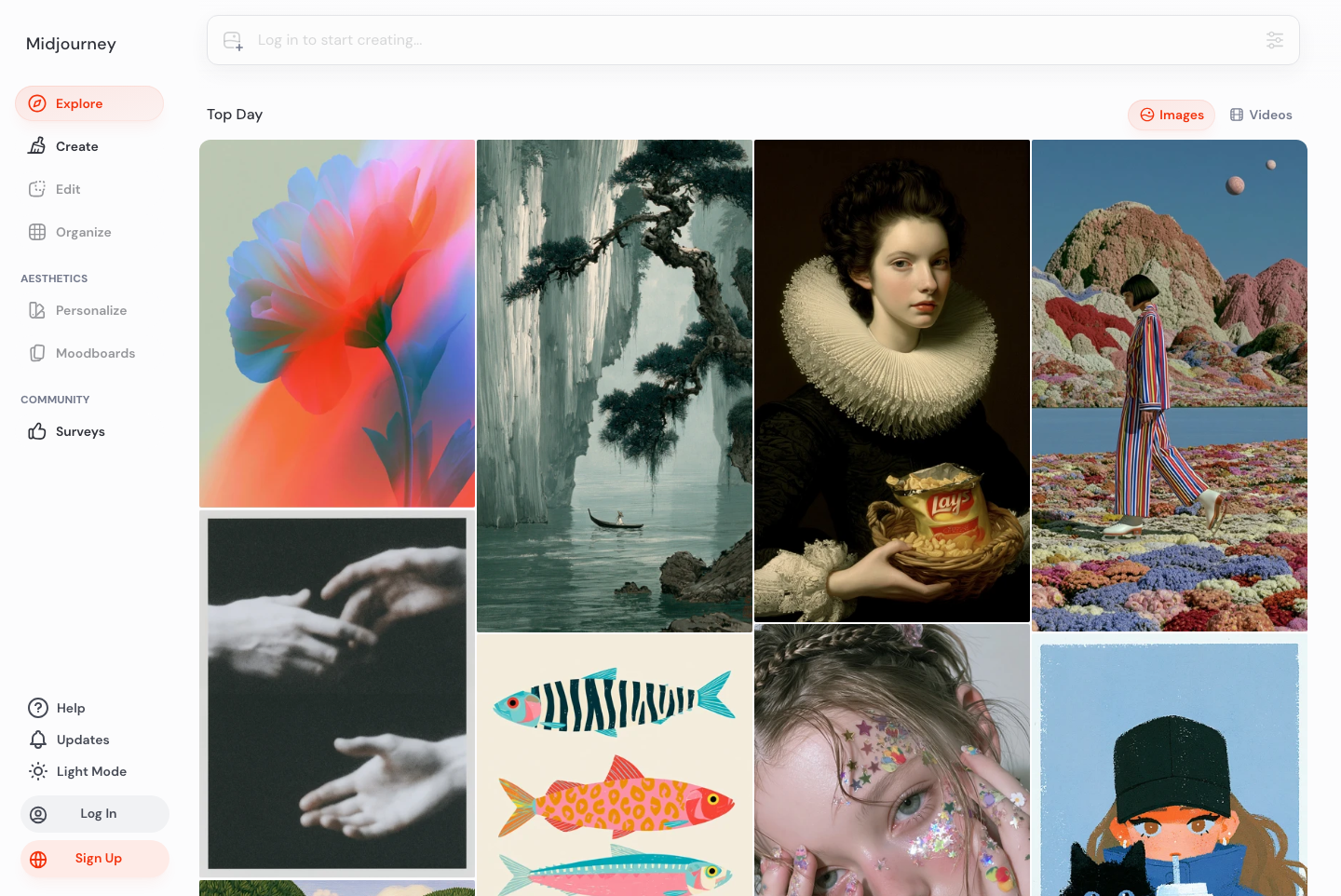
Inside Midjourney.
AI-generated analysis; edited and accountable: Tom Young. Data is verified from vendor sites on a dated schedule, not hands-on trials.
This vendor's site blocks automated reading, so the pricing and feature data here was entered by our editor from the vendor's public pricing page (Manually verified from docs.midjourney.com "Comparing Midjourney Plans" (midjourney.com has no public pricing page). Read in-browser 2026-07-09. Monthly prices; 20% annual discount noted per tier. No free tier (limited trial only on the niji-journey app). Companies over $1M/yr revenue must use Pro or Mega.).
- Verified
- July 2026
- Pipeline
- 2026.07.04-1
- Checks run (6)
- author, editor, quality_review, seo, factcheck, humanize
- SEO score
- 84
- Evidence sources (1)
- midjourney.com