
Shopia
We may earn a commission if you sign up through our link · Affiliate disclosure
Facts verified:
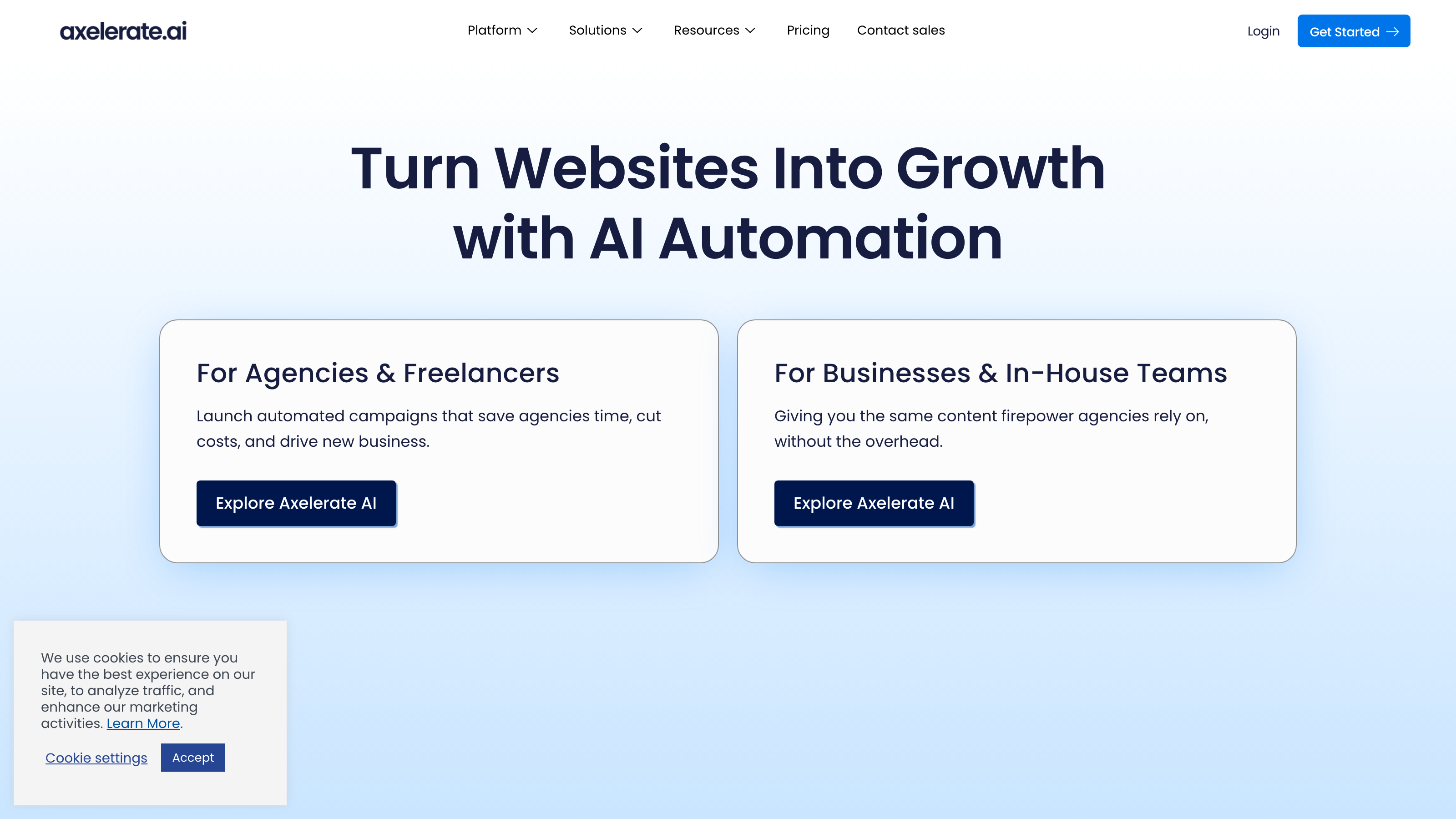
Shopia Review: AI Content Automation for Marketers, Agencies, and SEO Teams
TL;DR
This Shopia review covers an AI-powered content platform that automates blog writing, SEO optimization, and multi-channel marketing campaigns. Shopia is built for marketing teams, agencies, and content creators who need to produce large volumes of consistent, search-optimized content without proportionally scaling headcount. Plans range from $49/month for solo users to $319/month for agencies, based on verified pricing from the official site in July 2026.
Overview
Shopia is a web-based AI content platform designed to reduce the manual labor involved in creating marketing content. The core problem it addresses is straightforward: producing consistent, SEO-ready content at scale is slow and expensive when done entirely by humans. Shopia applies Generative AI to compress the time between ideation and published content, covering everything from blog articles to Amazon Listings and paid ad copy.
The platform targets a broad set of professionals. A solo blogger has different needs than a ten-person agency managing a dozen client accounts, and Shopia's tiered structure tries to serve both. Features like AI Agents, Topic Maps, and Multi-channel Campaigns point toward a tool that wants to be a central marketing hub, not just a text generator.
Shopia is accessible via web browser and through an Automations API - a set of programming interfaces that allow developers to connect Shopia's features to other software systems. It supports multiple publishers including Amazon, Facebook, Facebook Ads, Google, Google Ads, and Google Organic Search, which gives it a cross-channel reach that simpler writing tools lack.
Pricing and feature details in this Shopia review were verified from the official site in July 2026.
Key Features
AI Agents - Content Team
Shopia's AI Agents function as a virtual content team. Rather than prompting a single model for one output, the agents handle interconnected tasks: topic research, drafting, and optimization in sequence. This mirrors how a human content team operates, with different roles passing work down the line. For marketing teams trying to replace or supplement freelancers, this is the headline feature.
Topic Maps and Article Wizard
Topic Maps help users build a structured content strategy by identifying related subjects and keyword clusters around a core theme. The Article Wizard then guides users through generating a fully structured post from those inputs. Together, these tools handle the planning stage that writers often find most time-consuming.
Auto Brand Voice Detection
This feature analyzes existing content to detect and replicate a brand's tone and style automatically. Instead of manually writing style guidelines into every prompt, Shopia reads samples and applies a consistent voice across new content. This is particularly useful for agencies managing multiple clients with distinct tones.
Multi-channel Campaigns
Shopia supports content creation across several platforms from one workspace. Verified publishers include Amazon, Amazon Listings, Facebook, Facebook Ads, Google, Google Ads, and Google Organic Search. The Multi-channel Campaigns feature organizes content by channel and generates format-appropriate copy for each. A team running paid social alongside organic SEO can work from one interface rather than switching between tools.
Automation & Workflow
The platform's Automation & Workflow tools handle repetitive tasks like scheduling, content sequencing, and posting frequency. The Automations API extends this to custom integrations, letting developers wire Shopia into existing CMS or CRM platforms. This is the feature that separates Shopia from simpler AI writers and positions it closer to marketing automation tools.
Multilingual Support and Multi-region SEO
Shopia includes Multilingual Support and a specific Multi-region SEO feature. For businesses targeting audiences in more than one country, these tools help generate and optimize content for different language markets without requiring a separate localization workflow. The verified product data does not itemize which languages are covered, so buyers targeting niche languages should confirm support directly with Shopia before committing.
Collaboration & Sharing
The platform supports team-based work through multi-seat plans and Unlimited Workspaces. Collaboration & Sharing features allow team members to access shared projects, making it practical for content and marketing teams to work in parallel. The Agency plan includes 10 user seats, and the Business plan covers 3.
Prospect Reports and White Label Reports
These features are specific to the Agency and Enterprise tiers. Prospect Reports let agencies generate insight documents about potential clients' online presence, which can support sales pitches. White Label Reports allow agencies to brand these documents under their own name. Similar Business Insights and Website Insights extend this analysis capability for existing client accounts.
Shopia: Pricing
Shopia uses a subscription pricing model with four main tiers, a pay-as-you-go credit option, and a custom enterprise track.
- Solo: $49/month - Includes 600 credits per month, 1 user seat, and automated blog functionality.
- Business: $75/month - Includes 1,200 credits per month, 3 user seats, and Multi-channel Campaigns.
- Agency: $319/month - Includes 6,000 credits per month, 10 user seats, and Prospect Reports.
- Enterprise - Custom pricing for organizations needing scale. Includes Custom AI solutions, Teams custom roles/permissions, and tailored onboarding. Contact Sales for a quote.
- Pay As You Go Credits: $0.10/Credit - Applied when a plan's monthly credit allocation runs out.
- White Labeling - Listed as a custom add-on. Contact Shopia for pricing.
The credit system is the main variable to watch. At $49/month, 600 credits may not go far for high-volume use cases. The $0.10/credit overage rate means a user who consistently exceeds their monthly limit could see costs climb quickly. For example, a user consuming 2,000 credits per month on the Solo plan would pay $49 plus $140 in overage charges, totaling $189 - substantially more than the $75/month Business plan and approaching half the Agency plan price. Buyers should estimate their credit usage before selecting a tier.
The verified product data lists "Free" as a pricing category, but no free plan details are itemized. Buyers expecting a free trial or sandbox should confirm availability directly with Shopia before assuming one exists.
Who It's Best For
Marketing Teams at Mid-size Companies Teams producing content across multiple channels - organic search, paid social, Amazon Listings - will find the Business or Agency tier most useful. The Multi-channel Campaigns feature and Collaboration & Sharing tools are built for coordinated, cross-platform publishing.
Agencies The Agency plan's 10 user seats, Prospect Reports, and White Label Reports are clearly designed with client-service firms in mind. The ability to generate branded reports and analyze prospective clients' web presence adds genuine business development value beyond basic content generation.
Content Creators Scaling Organic Output Solo bloggers or independent SEO specialists who publish frequently can use the Solo plan to automate research and drafting. The Topic Maps and Article Wizard reduce the planning overhead that slows high-frequency publishing.
E-Commerce Sellers Shopia's support for Amazon and Amazon Listings makes it relevant to sellers who need product descriptions, A+ content, or keyword-optimized listing copy at volume. Combining this with Generative AI drafting and Automation & Workflow tools gives e-commerce operators a faster path from product catalog to published listing.
Not a Good Fit: Developers Needing a Pure API Integration Shopia does include an Automations API, but the platform is primarily built as a web interface. Developers looking for a lightweight, API-first content generation service with extensive technical documentation and pay-per-use flexibility may find tools designed specifically for developers a better match. Similarly, very small operations with minimal content needs may find even the $49/month Solo plan difficult to justify against the output volume they actually require.
Alternatives
Jasper Jasper is a well-established AI writing platform with brand voice tools and multi-user support. It focuses primarily on marketing copy and long-form content. It does not have the same agency-specific reporting tools that Shopia offers, but it has a larger template library and more publicly documented integrations.
Surfer SEO For teams whose primary concern is search optimization rather than content volume, Surfer SEO offers deep on-page SEO analysis and AI-assisted content editing. It integrates with Google and provides keyword density guidance that is more granular than Shopia's documented SEO features. It is not a full content automation platform.
Copy.ai Copy.ai targets marketing teams and offers workflow automation for content production. It supports multi-channel outputs and has a credit-based usage model similar to Shopia. It lacks the agency-specific white-label and prospect reporting features but may appeal to smaller teams at a lower entry price.
FAQ
How does the credit system work in Shopia? Each plan includes a set number of credits per month: 600 on Solo, 1,200 on Business, and 6,000 on Agency. Credits are consumed when using AI generation features. When the monthly allocation is exhausted, additional usage costs $0.10 per credit. Buyers who are unsure of their usage should monitor consumption closely in the first billing cycle to avoid unexpected charges.
Does Shopia support Amazon content creation? Yes. The verified feature set includes Amazon and Amazon Listings as supported publishers. This means the platform can generate product descriptions and other listing content formatted for Amazon. This makes Shopia relevant for e-commerce sellers managing large product catalogs.
Is there a free tier or trial available? The verified product data lists "Free" as a pricing category, but no free plan details are itemized in the verified data. Interested users should contact Shopia or check the current website to confirm whether a free trial or sandbox is available before purchasing.
What makes the Agency plan different from the Business plan? The Agency plan at $319/month adds Prospect Reports, White Label Reports, 10 user seats (versus 3 on Business), and 6,000 credits per month (versus 1,200). These features are designed for firms managing multiple client accounts and needing to generate branded deliverables for business development and reporting.
Can Shopia be integrated with external tools? Shopia provides an Automations API, which allows developers to connect the platform to other software systems such as a CMS or CRM. The depth of available API endpoints and documentation is not detailed in the verified product data. Teams with complex integration needs should review API documentation directly or contact Shopia before committing to an Enterprise plan.
Shopia: Final Verdict
Shopia is a focused, feature-rich platform for marketing teams and agencies that produce content at scale across multiple channels. Its strongest case is for agency operators who can use Prospect Reports, White Label Reports, and Auto Brand Voice Detection to serve multiple clients from one workspace. The Multi-channel Campaigns coverage - spanning Amazon, Amazon Listings, Facebook, Facebook Ads, Google Ads, and organic search - is broad relative to single-channel writing tools.
The credit system is the primary friction point. Buyers must estimate their usage carefully, because overage charges at $0.10/credit can push monthly costs well above the plan price. A Solo plan user exceeding 600 credits by 1,400 in a given month pays $189 total, not $49. The gap between the Business and Agency tiers is also wide, leaving mid-size teams with fewer options for gradual scaling.
This Shopia review points to one clear ideal buyer: a digital agency or in-house marketing team producing content across at least two or three channels, with enough monthly volume to justify the higher-tier plans. Solo users and very small teams should calculate expected credit consumption against the $49/month entry price before committing. For agencies in particular, Shopia offers a combination of content automation and client-facing tools that is not common in this product category.
The facts.
Pulled from Shopia’s own pages and dated so you can see how current each one is. Anything we could not confirm is left out rather than guessed.
- Free tier
- Yes checked Oct 2026
- Starting price / month
- $49/mo checked Oct 2026
- Cheapest paid tier
- $49/mo checked Oct 2026
- Pricing model
- Usage-based checked Oct 2026
- API access
- Yes checked Oct 2026
- Platforms
- web, api checked Oct 2026
- Enterprise plan
- Yes checked Oct 2026
Shopia pricing.
Pricing extracted from Shopia's site. Confirm before buying.
Pros & cons.
We don’t publish star ratings we can’t defend. These come from running Shopia on live briefs.